Fall Preschool Program
A Strong Start Begins Here.
Fall Preschool Program | Albany’s South End | Beginning October 2026
A Strong Start Begins Here.
Fall Preschool Program | Albany’s South End | Beginning October 2026
A safe, engaging, and nurturing preschool environment where children can learn, explore, build relationships, and grow.
At a Glance
Location
Albany, NY — South End
Start Date
October 2026
Ages
3.5–5.5 years
Program Hours
8:45 AM – 3:30 PM
Program Type
Preschool
Tuition
Contact us for tuition information
Enrollment
16 slots available
PreK-2: Roots of Belonging and Wonder
Morning begins gently in calming classrooms filled with light, music, and sensory tools. Children settle in with puzzles, picture books, or quiet play. Daily morning circles bring students together through song, movement, and affirmations that ground them in safety and joy.
Throughout the day, learning unfolds through stories, art, and nature. Read-alouds spark empathy and imagination. Writing is introduced through drawing, storytelling, and playful phonics. Math emerges in cooking, block play, and neighborhood walks. Thematic projects like “Homes and Habitats” integrate science and social studies. Time outdoors and sensory supports help children feel at ease, expressive, and engaged.
Grades 3-5: Branches of Inquiry and Voice
As students grow, so does their sense of identity and agency. The day often starts with journaling or classroom circles where students share thoughts or reflect on questions tied to fairness, belonging, or community.
Academic blocks are grounded in exploration. Students read folktales, biographies, and oral histories, then write zines, speeches, or stories that connect to their own experiences. Math becomes a problem-solving tool, used to plan events or analyze patterns in the world around them. Project-based learning encourages teamwork and research. Creative time and restorative circles help students build emotional skills, celebrate progress, and care for one another.
Grades 6-8: Canopies of Leadership and Liberation
Middle school students are invited to lead. Mornings begin with forums that might include peer presentations, dialogue on current issues, or guided mindfulness. Students explore their values and develop the tools to express them clearly and responsibly.
Literacy focuses on writing with purpose. Students analyze songs, essays, news, and fiction, then create op-eds, personal narratives, and campaign materials. Math is applied to real-world challenges and design thinking. Thematic units explore justice and community, often leading to fieldwork or civic projects. Electives support deeper inquiry in media, movement, or organizing. Advisory groups meet daily to reflect, recalibrate, and prepare for what’s next.
A Day at Preschool
Every day provides opportunities for children to connect, explore, learn, and grow.
-
Morning Welcome
Time to settle in, connect with teachers and friends, and prepare for the day.
-
Learning & Exploration
Age-appropriate experiences encourage curiosity, early learning, problem-solving, and discovery.
-
Creative Activities
Children have opportunities to express themselves through creative, hands-on experiences.
-
Play & Social Development
Through play and interaction, children practice communication, cooperation, friendship, and independence.
-
Meals & Snacks
A monthly menu will be provided to families.
-
Closing & Reflection
Children have an opportunity to transition from the day's activities, reflect, and prepare for dismissal.
Daily activities and schedules may vary based on the finalized program schedule.
Learning Environment Model
Designed for Justice-Rooted, Student-Centered Practice
-
Mixed-Age Pods:
For classes, electives and lunch (e.g. 1–2, 3–5, 6–8) to build mentorship and community.
-
Flexible Seating:
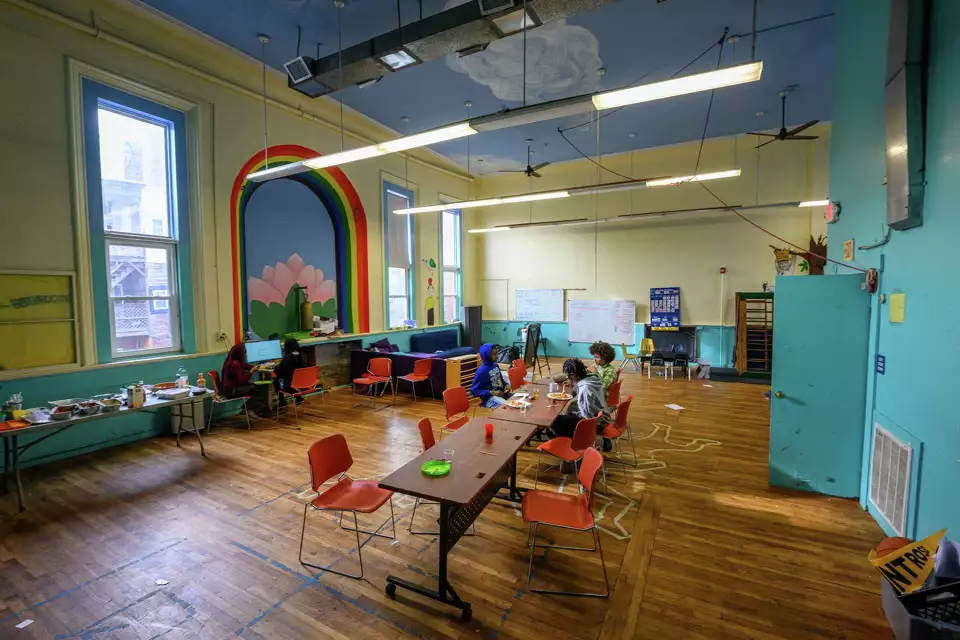
Cushions, floor spots, standing desks, sensory spaces.
-
Student Voice Walls:
Where student questions, dreams, and declarations are posted.
-
Community Corner:
Featuring local elders, oral histories, news clippings, and neighborhood maps.
-
Healing & Quiet Zones:
Nooks for regulation and self-directed calming.
-
Outdoor Learning:
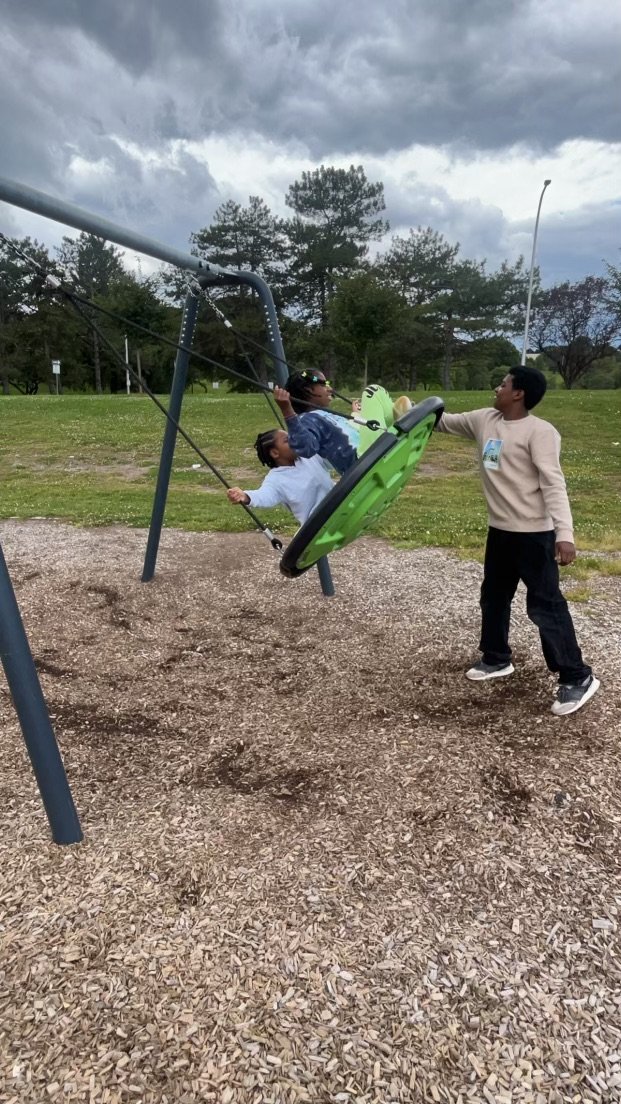
Daily access to nature, even brief “sky breaks” or sidewalk walks.
-
Culturally Reflective Materials:
Books, art, manipulatives representing Black, Indigenous, and diasporic cultures.
-
Student-Created Visuals:
Anchor charts, murals, and documentation displays made with student input.
Daily Rhythm & Learning Environment Comparison: PreK–8
[Practice of Learning]
-
Arrival & Grounding
PreK-2
Soft start with sensory play, music, storybook zones
Grades 3-5
Journaling, social check-ins, affirmations
Grades 6-8
Current events dialogue, mindfulness, or student-led warm-ups
-
Literacy Block
PreK-2
Phonics, read-alouds, story retelling with art/play
Grades 3-5
Culturally relevant novels, writing workshops
Grades 6-8
Critical literacy, debates, genre studies
-
Math Block
PreK-2
Manipulatives, songs, stories with numbers
Grades 3-5
Games, group problem-solving, real-world math
Grades 6-8
Project-based math, budgeting, data analysis
-
Snack / Movement
PreK-2
Extended outdoor time, dancing, rest mats
Grades 3-5
Active break: playground or indoor circuits
Grades 6-8
Self-directed break with regulation tools or music
-
Theme-Based Learning
PreK-2
Exploration via nature walks, block play, classroom experiments
Grades 3-5
Research-based projects with group work
Grades 6-8
Independent and collaborative anchor projects connected to social issues
-
Lunch & Community
PreK-2
Family-style eating, storytelling with staff
Grades 3-5
Table prompts, peer discussion, music
Grades 6-8
Mixed-grade tables, journaling, music, quiet time option
-
Creative Time
PreK-2
Art, dramatic play, music circles
Grades 3-5
Theater, painting, drumming, coding intro
Grades 6-8
Media arts, spoken word, film, movement electives
-
Circle Time / Advisory
PreK-2
Story circles, feelings chart, shared rituals
Grades 3-5
Restorative circles, role-play, identity mapping
Grades 6-8
Peer mediation, organizing forums, reflective journaling
-
Applied Learning
PreK-2
Messy play, exploration centers
Grades 3-5
Labs, gardening, tool use, mapping
Grades 6-8
Studio time, peer critique, civic engagement projects
-
Closing & Reflection
PreK-2
Song, affirmations, story, gratitude
Grades 3-5
Group share-out, appreciations, visual journaling
Grades 6-8
Exit surveys, student-led announcements, journaling
Learning Environment Snapsot
[Evidence of Learning]
-
Seating
PreK-2
Cushions, floor mats, cozy corners
Grades 3-5
Group tables, flexible desk zones
Grades 6-8
Modular desks, standing + lounge options
-
Sensory Zones
PreK-2
Water tables, soft lighting
Grades 3-5
Regulation corners with posters
Grades 6-8
Calm-down stations with journaling options
-
Student Voice
PreK-2
Visuals of class rules made together
Grades 3-5
“I wonder…” wall, co-created charts
Grades 6-8
Planning boards, public idea spaces
-
Community Displays
PreK-2
Family photos, name murals
Grades 3-5
Classroom vision boards
Grades 6-8
Timeline of activism, student exhibits
-
Outdoor Learning
PreK-2
Daily exploration, garden visits
Grades 3-5
Weekly field-based inquiry
Gradese 6-8
Project fieldwork, “independent” site visits
-
Tech Use
PreK-2
Minimal, story-based apps
Grades 3-5
Research stations, creative tools
Grades 6-8
Media production, research and editing